
"coffee freedom"
1000 article(s) found

Flavor description of coffee beans from Tianyi Manor in Nicaragua
Nicaraguan coffee is rich in purity and fragrance, and the right balance of acidity and bitterness is regarded as top grade in the eyes of international coffee experts. However, Nicaragua is one of the poorest and backward countries in the world, with backward production methods and management concepts, coupled with the freedom of the Latin American people, coffee production and

Aromatic and mild Salvadoran coffee Flavor Taste Manor Features Fine coffee beans Introduction
The flag of El Salvador was adopted in 1822, revoked in 1865, restored in 1912, and officially recognized as the national flag in the Constitution of 1972. The flag is rectangular in shape and has an aspect ratio of 335:189. The flag is composed of three parallel rectangles of blue, white and blue from top to bottom. The white part is painted with the national emblem pattern in the center. El Salvador was a member of the former Central American Federation, and its flag was

Characteristic Flavor description varieties of Coffee beans in Linna Manor, Nicaragua
Nicaraguan coffee is rich in purity and fragrance. The right balance of acidity and bitterness is regarded as top grade in the eyes of international coffee connoisseurs. However, Nicaragua is one of the poorest and backward countries in the world, with backward production methods and management concepts, coupled with the freedom of the Latin American people, poor coffee production and shipping quality, or lack of time.
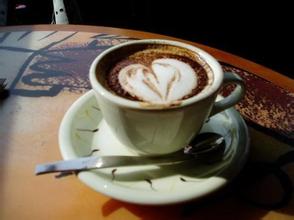
The taste of Guatemalan coffee with elegant aroma. Introduction to fine coffee in manor area.
From 1871 to 1944, the country began to devote itself to economic modernization. At the same time, the United Fruit Company, which is dominated by the United States, has also begun to buy large coffee and banana estates in Guatemala and intervene in Guatemalan politics. After the revolution in October 1944, the former dictator was overthrown, democracy and freedom of expression were implemented in Guatemala, and the first law in Guatemalan history to protect the interests of workers came into force.

Introduction to Xuemai Manor, Flavor Manor in Bolivian Coffee producing area
Rich in mineral resources, mainly tin, antimony, tungsten, silver, zinc, lead, copper, nickel, iron, gold and so on. Mineral deposits are rich, with tin reserves of 1.15 million tons, ranking second in the world; iron reserves of 45 billion tons, second only to Brazil in Latin America; and lithium reserves of 100 million tons, ranking first in the world. [7] Oil and gas Bolivia is rich in oil and gas resources. Proven oil reserves are 929 million barrels, as of 2013

Introduction to boutique coffee with rich and unique aroma and taste characteristics of Bolivian snow vein manor
In 1932, the Chaco War broke out between Bolivia and Paraguay for oil resources in the North Chaco region. Bolivia was defeated and lost a large area of territory. The people's armed uprising broke out in April 1952, and Paisdensolo, leader of the nationalist revolutionary movement, became president. Since then, there have been frequent military coups and long-term political instability. Modern assets with South American characteristics were restored in October 1983

Coffee training Culture Coffee and Japanese Culture
As early as the end of the 17th century, the Dutch brought coffee to Asia in the early 18th century, and coffee was soon introduced to Japan. Before and after the Meiji Restoration, Japan advocated total westernization, and the coffee culture with Dutch flavor took root in Japan. During the Taisho period (1879-1926), due to the pervasive atmosphere of freedom and democracy, fresh and luxuriant culture, cafes have been very prosperous. But with the Japanese army,

The best place to drink coffee-Blue Mountain
On the other side of the Blue Mountain is heaven and freedom. The Blue Mountains in the fairy tales of early Australian immigrants can only be found under the Australian sky because there are slopes of Eucalyptus trees. This magical tree can emit blue gas, accumulate at the top of the mountain and at the bottom of the valley, and then spread out along the hillside, turning the peak into a seemingly blue, like a faint shadow in the heavy rain. So people call

Is there still this kind of operation for breakfast? Food + coffee play turn impromptu inspiration
Following Cafe Review (official Wechat account vdailycom) found that Beautiful Cafe opened a small shop of its own in this summer when it was brushed by freestyle, the impromptu, casual and casual spirit of life appeared with a clear-cut stand. Like the mash-up style that has been popular in the fashion world for a long time, the appearance is full of freedom: a suit with shorts, a long skirt with sneakers, no reason, just me.
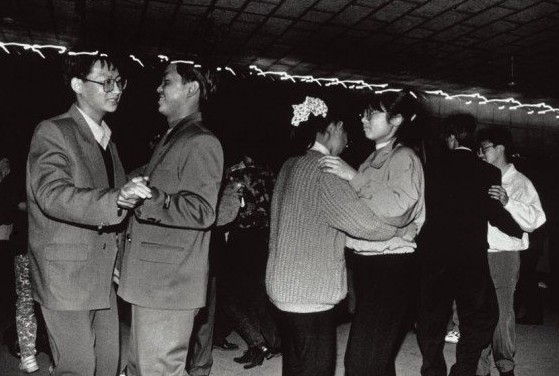
Maid cafes have been popular in China since the 1980s! There is a picture as proof.
The 1980s was a belated name, and those who experienced it began to talk about it in a nostalgic tone. At that time, it was a period of prosperity, the country had just recovered its vitality, and the freedom of thought and life gradually opened. College students, known as the favorites of heaven, are interpreting a different life in the right age of youth. Nowadays, some people even say that the 1980s is the best time in China in the past hundred years.

Basic knowledge of Coffee and Japanese Fine Coffee Culture
As early as the end of the 17th century, the Dutch brought coffee to Asia in the early 18th century, and coffee was soon introduced to Japan. Before and after the Meiji Restoration, Japan advocated total westernization, and the coffee culture with Dutch flavor took root in Japan. During the Taisho period (1879-1926), due to the pervasive atmosphere of freedom and democracy, fresh and luxuriant culture, cafes have been very prosperous. But with the Japanese army,

Coffee has become a popular drink, thanks to the Japanese.
As early as the end of the 17th century, the Dutch brought coffee to Asia in the early 18th century, and coffee was soon introduced to Japan. Before and after the Meiji Restoration, Japan advocated total westernization, and the coffee culture with Dutch flavor took root in Japan. During the Taisho period (1879-1926), due to the pervasive atmosphere of freedom and democracy, fresh and luxuriant culture, cafes have been very prosperous. But with the Japanese army,
Introduction to the flavor and taste characteristics of Tanzania coffee manor with pure flavor and rich taste.
The national emblem of Tanzania was formulated in 1964 on the basis of the Tanganyika national emblem. The central shield, the national emblem of Tanzania, is divided into four parts: the top burning torch cuts through the pre-dawn darkness and lights the spark of freedom and hope; it is painted with the flag of Tanzania; there are crossed tomahawks and spears on the red ground below; and finally, India.

Coffee and the Story of Coffee Culture in Japan
As early as the end of the 17th century, the Dutch brought coffee to Asia in the early 18th century, and coffee was soon introduced to Japan. Before and after the Meiji Restoration, Japan advocated total westernization, and the coffee culture with Dutch flavor took root in Japan. During the Taisho period (1879-1926), due to the pervasive atmosphere of freedom and democracy, fresh and luxuriant culture, cafes have been very prosperous. But with the Japanese army,

Starbucks' plan to enter Italy this year has caused an uproar.
In many ways, Starbucks and such cafes are like the advanced business cards of the post-industrial capitalist world, making a profit by helping consumers realize their self-awareness. Like food and wine, Apple and iPhone, Google and its APP. The brand has a basic, potential image, and in itself, vagueness means removing some formal freedom and rights, while simply staying.

What kind of coffee filter cup is easy to use? what's the difference between the type of coffee filter cup and the hand filter cup?
Professional coffee knowledge exchange more coffee bean information Please pay attention to the coffee workshop (Wechat official account cafe_style) origami filter cup the biggest feature is its flexibility. It is compatible with the HARIO V60 filter cup and the Karita filter cup, which in itself gives you a great freedom to express a wide range of flavors. You can apply our standard formula HARIO V60 or Caritapo formula. By
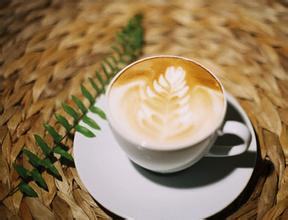
Introduction to boutique coffee with rich and balanced taste and flavor of Bolivian snow vein manor
In the middle of the Bolivian national emblem is an oval, with patterns such as the sun, peaks, bread trees, camels, grains and so on. There are ten five-pointed stars in the lower half of the circle, representing the nine provinces that make up Bolivia and the coastal provinces seized by Chile; the top half is written about Bolivia in Spanish. Three national flags are hung on each side of the oval; behind them are crossed bundles and weapons, symbolizing authority; and the left bundle

Cadillac turned the ground floor of headquarters into an art cafe.
The lifestyle and petty bourgeois sentiment represented by coffee seem to match many brands, especially those that want to attract millennials in pursuit of freedom and personality. Car brands have been addicted to caffeine in recent years. Not long ago, Mercedes-Benz opened Mercedes me, an urban experience store with a coffee shop in Sanlitun, Beijing. June 2, Cadillac headquarters in New York

Flavor and taste characteristics of coffee manor in Kenya introduction of fine coffee beans
The Kenyan flag is based on the Kenyan flag and the Kenyan flag based on the flag of the African National Union of Kenya before independence. It is rectangular, with a ratio of length to width of 3:2. From top to bottom, it is made up of three parallel horizontal rectangles of black, red and green, with a white edge above and below the red rectangle. The pattern in the middle of the flag is a shield and two crossed spears. Black symbolizes Ken.

Everett bikini barista sued the dress code for deliberately targeting women
Professional baristas Please follow the Coffee Workshop (official Wechat account cafe_style) A number of bikini baristas in Everett, a northern suburb of Seattle, filed a lawsuit on the 11th against two new dress codes passed by the city, accusing them of violating their constitutional rights to freedom of expression and privacy. According to the Seattle Times, the two laws were unanimously passed by the Everett City Council in August.